


So says Simon Keefe at Calastone, which is bringing to the U.S. an application that makes traditional funds available via a blockchain.
Tokenization is gaining ground among traditional financial services firms. But it’s also set to take off among major decentralized finance (DeFi) platforms such as Coinbase and Kraken.
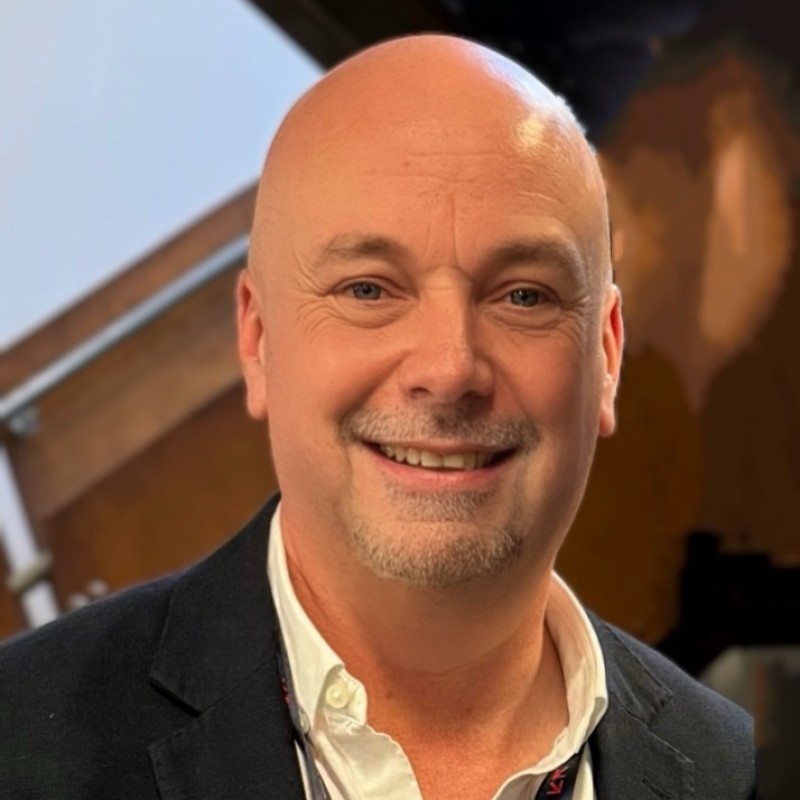
Simon Keefe
This is likely to drive convergence between traditional and DeFi realms, as the DeFi sector is eager to embrace tokenization of real-world assets (RWAs), says Simon Keefe, managing director and head of digital solutions at Calastone, a London-based global funds network. Keefe spoke on an industry panel covering traditional finance, tokenization, and DeFi during SS&C Deliver, a customer conference held recently in Orlando, Florida.
For its part, Calastone, an SS&C company, has been using technology to bring together asset managers, distributors, and service providers. In fact, the company is moving quickly to bring a new capability to help U.S. clients work with blockchain technology — the basis for DeFi organizations. Blockchains enable peer-to-peer financial transactions minus the conventions of traditional finance.
“We’ve made it really, really simple for existing asset managers and existing funds and share classes to just extend their distribution onto blockchain,” Keefe says. “So we’ve created an application that makes it really easy. A click of a few buttons and you can make your fund available on a blockchain.”
Calastone is “working with some asset managers to put it live in the US,” Keefe says. “It’s already live in Europe and in Asia.” Keefe declines to name the American asset managers the company is working with.
“So, if I’m a big liquidity fund manager and I’ve got a U.S. dollar liquidity fund that’s already scaled, and has tens of billions of dollars in it, and I’m distributing that to corporate treasurers, and I’ve got some investors that are sitting natively on a blockchain of wallets who want to invest into my fund, I can just come to SS&C and say, ‘Okay, you distribute that fund for me, you administer it. I’ve got an investor here that wants to buy that on the Ethereum blockchain,’ ” Keefe explains. “Then we click a few buttons. The investor has to go through an AML and KYC process … and then we map their blockchain wallet to the transfer agency register account, and we enable them to interact directly on the blockchain.”
As for Keefe’s assertion that DeFi players want to engage in the tokenization of RWAs, Calastone surveyed 70-plus DeFi distribution platforms. “We went out to them and asked, ‘What is your plan? What is your strategy around tokenized traditional assets? Otherwise known as real-world assets?’ ” Keefe says.
“And the numbers speak for themselves. So 43 percent of those big DeFi platforms come and do it. They offer tokenized forms of traditional assets,” Keefe says. “47 percent of them are going to do it, but importantly 85 percent of them see tokenized money market funds initially to be a big, big thing in the next 12 months. And then within two years, 91 percent are going to significantly expand the market.”
 “To those same companies, we asked, ‘Okay, what do you do with your money? How do you manage your own balance sheet?’ 17 percent already invest in tokenized traditional assets. They could be tokenized gilts, some form of tokenized gilt bond or funds. 71 percent are thinking of employing tokenized assets,” Keefe says.
“You can see from these numbers here that this is no longer just something we’re talking about in the corner. This is a key part now of everybody’s distribution strategy or should be in the asset management world. No one can afford be able to sit back and see if this is going to happen. It’s happening now,” Keefe says.
Is your company featured in this article? Contact us about reprints or licensing.
Leave a Reply