
The now former acting chairman of the CFTC maintained a laser-sharp focus on her agenda in the year she had at the top.
Caroline D. Pham, the acting chairman for the Commodity Futures Trading Commission (CFTC) for most of 2025, stepped down from her post last month to make way for Michael Selig, who became the 16th chairman of the CFTC on Monday, Dec. 22, 2025.

Grygo is the chief content officer for FTF & FTF News.
While Selig brings with him a rather full agenda focused on digital assets, deregulation, and more, I think his mission has been made easier by Pham, who was focused on paving the way for the CFTC’s new governance role over digital assets. She accomplished that goal while juggling many other agenda items.
President Biden nominated Pham to be a CFTC Commissioner in 2022, representing the Republicans, and the U.S. Senate confirmed her unanimously on April 14, 2022. By January 2025, Pham was designated as the CFTC’s Acting Chairman, following Trump’s return to the White House and the imminent departure of then-CFTC Chairman Rostin Behnam.
In the announcement of her departure, Pham notes that during her tenure, she:
- Was “a champion for good government, proposing and implementing a number of reforms to protect Constitutional rights and promote due process and transparency;”
- Addressed Dodd-Frank Act concerns and the finer points of swaps regulation; and
- Issued “a comprehensive framework for self-reporting and cooperation in enforcement actions and referrals for non-compliance issues, and enabling innovation in market structure, such as perpetual contracts, 24/7 trading, and prediction markets.”
In addition, Pham pushed for modernization efforts that included:
- Deploying the regulator’s first automated market surveillance system, “saving nearly $50 million in annualized costs;”
- Restructuring the CFTC’s “organization and operations to maximize efficiency and effectiveness;”
- Reducing “regulatory burdens to promote U.S. economic growth;” and
- Overseeing a pilot program to “increase liquidity and hedging in energy markets and deliver potentially billions in energy savings.”
It must be pointed out that she accomplished much of her agenda without the guidance of other CFTC commissioners, as they were not replaced in the normal fashion after they stepped down. To say the least, last year was an unusual one for both houses of Congress, which led to delays for the CFTC and other regulators. Selig, the Trump team, and the U.S. Senate will likely move quickly to find a new slate of commissioners for 2026. It’s also true that many in the regulatory community respectfully disagree with Pham’s policies and philosophies. What they can agree on is her laser focus on achieving her agenda. That’s a lesson for us all.
Overall, I think Pham will be remembered most for her efforts to get the CFTC up to speed on cryptocurrencies and other digital assets as they move into the mainstream. She notes that she “launched the CFTC’s Crypto Sprint to implement the President’s Working Group on Digital Asset Markets report recommendations, achieving historic milestones such as listed spot crypto trading on CFTC-registered futures exchanges, digital asset markets pilot program, tokenized collateral guidance, and the CFTC Crypto CEO Forum and CEO Innovation Council.”
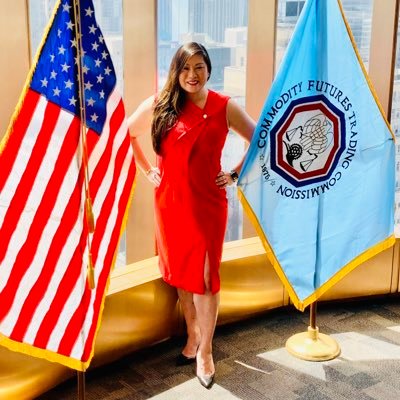
Caroline D. Pham
“It has been the honor of a lifetime to lead the CFTC during such a historic moment for market structure and innovation,” Pham says in her final prepared statement as acting chairman “This year, we also refocused on our mandate to promote responsible innovation and fair competition as the CFTC prepares to take on expanded oversight of new markets and new products like digital assets, crypto, and prediction markets.”
It is going to be interesting to see what the CFTC achieves in 2026 on the digital asset front, particularly the nitty-gritty of actual, new regulation.
Need a Reprint?