


Bill Stone at SS&C Technologies says that the company can rein in A.I. even as it applies it to securities operations. Stone also tackles other key industry concerns in this FTF News Q&A.
(In a wide-ranging Q&A, Bill Stone, who is chairman, CEO, and founder of SS&C Technologies, addresses not only A.I. and its woes — “So, there are going to be limitations to A.I.” — but also the 40th anniversary of SS&C’s launch, where financial markets are heading, the appeal of crypto and tokenization, and more. During the annual SS&C Deliver 2026 customer conference last month, SS&C announced that it is bolstering a range of solutions, including wealth management, retirement, alternatives, and asset management, through the SS&C AI Gateway governance platform. Stone spoke to FTF News during the annual SS&C Deliver 2026 customer conference.)
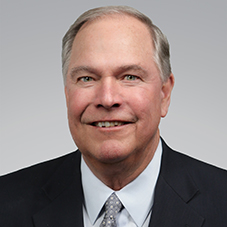
Bill Stone
Q: SS&C has been in business for 40 years, and congratulations on that. I was wondering, did you know that it was going to work when you started it?
A: I had confidence it was going to work; otherwise I wouldn’t have done it. Trees don’t grow to the sky. And we had our ups and downs.
At the end of 1986, there were four people who worked at SS&C, and we did $86,000 in revenue. We had 17 people at the end of ’87, and we did $800,000. In ’88, we had 38 people who worked for us, and we did $2.2 million. But in ’89, we had 26 people who worked for us, and we did $1.26 million; I had to fire those 12 people. That was very difficult because I hired every one of those people. But if I hadn’t fired them, I wouldn’t have had enough money to stay in business. I didn’t have a bunch of venture capital money or anything. I had about $20,000 to my name, but we rebounded. We had 43 people the next year and did $3.8 million.
So ups and downs, but we were onto something. PC networks were about to take over, and we were one of the first with a large-scale system built on a Novell network, and it was called CAMRA. That was a big deal in the late ’80s.
When we first installed CAMRA at General American Life Insurance, they were paying $90,000 per month in data center charges. When we put CAMRA in, we put in a little network in their investment department, a little server, all six or seven nodes, and our software cost them $23,000 a year. So, $90,000 times 12 is $1,080,000; that went to $23,000. That’s a 97 percent reduction in cost.
Q: It was a no-brainer then.
A: You could be pretty popular if you could do that. And it was so much better. Real time, all the information in front of you, and none of those cryptic C:\ prompt commands.
Q: So A.I. is this big thing, and everyone’s talking about it. What is your sense of A.I.? How real is it?
A: Well, some of it’s very, very real. The question is: ‘Is it all-encompassing on everything?’ I doubt it. But it’s going to do certain things. For certain specific workflows, it is going to really change them.
A.I. may also be able to go out to different data sets and grab the data it needs in order to continue processing. But a lot of times, certain securities, whether they be foreign securities or certain derivatives where you can’t find a database of prices, you can’t value them except to go create a model that would model the value of them. That’s not nearly as accurate as an exchange price.
So, there are going to be limitations to A.I. because there are limitations in the business, and A.I. is not going to be able to overcome some of those.
Q: Does A.I. worry you, though? We have whistleblowers saying that A.I. is going to destroy humanity. And then people at these companies say, ‘Well, it will.’ And then other people are saying, wait a minute. What do you think?
A: Well, I’m much more in the wait-a-minute category.
Before we scare ourselves to death, why don’t we make sure that we understand what it is that we are using? When they say that these agents are collaborating with each other to go against what the owners of these companies have allowed them to do, that they’re now rebelling —what happens if you pull the plug out of the outlet? They just automatically generate their own electricity? How about: I guess not.
Q: That would have to happen at such a high level of thinking that is not there now.
A: What I tell people is: ‘Hey, we’re putting artificial intelligence in the different workflows we have, but that doesn’t mean we’re getting rid of human intelligence.’
We’re using A.I. as an accelerant and not being defensive about it. At the same time, we built what they call harnesses so that the A.I. can’t get out. Ours is called SS&C AI Gateway. So, you can get in, but we’re going to track you everywhere you go until we have an audit trail. This is to prevent Lone Rangers — these destructive agents — from floating around in our data centers.
Q: Switching gears a little bit, financial markets have been dealing with a lot, right? Do you have any sense for where financial markets might be headed this year? And does anything about that worry you?
A: I think the economy overall is pretty strong, and the labor participation rate is up. Unemployment is down. Inflation has picked up a little bit, but nothing like the 9 percent we had a few years ago. And so I think I’m a little sanguine about it all.
I think [U.S. Treasury Secretary Scott] Bessent’s a smart guy. I think [U.S. Secretary of State Marco] Rubio’s a smart guy. I think [U.S. Secretary of Commerce] Howard Lutnik is a smart guy. I wouldn’t say that Trump listens to all of them all the time by any stretch of the imagination, but I think that they have some business savvy and tend to be more business-type people than the academics that we get oftentimes.
Q: Switching gears again, the new regulators running the CFTC and the SEC are very different from their immediate predecessors as far as policies and agendas. But that might change with the mid-term elections and Congress. Have you felt a difference with the current set of regulators? Because they’ve certainly taken a different path on digital assets, tokenization, and crypto. So, when it comes to digital assets and tokenization, how real are they? There’s been a lot of activity this year.
A: Whether it’s Bitcoin or one of the other ones, it’s what people feel, right? It’s a market. So if people are bullish about it, then it goes up. And if people aren’t bullish about it, it goes down. And is there any settling mechanism? I don’t know how that gets played out other than you keep trading till you quit trading.
Q: Well, in theory, the blockchain’s distributed ledger technology is supposed to do clearing and settlement almost immediately. But you have conflicting blockchains, and they don’t always work together … I do think once they can get their act together, I think it could be amazing for not only digital assets, but traditional assets.
 A: If you can take all the settlement risk out of it and you can instantaneously settle or settle in four hours instead of 24 hours, then you’re going to take a lot of risk out of the system too. So there’s a lot to that.
Wall Street still has a big computer upgrade to go through. They’re still running old technology in lots of places, and you’re running out of COBOL programmers to change it.
Q: What kind of a computer hardware upgrade is coming for securities-trading firms?
A: The hardware upgrade will continue to evolve. As the chips get faster, as quantum comes online, and as A.I. changes the way we program, the winners will be powerful, distributed, real-time, or nearly real-time machines.
Is your company featured in this article? Contact us about reprints or licensing.

Leave a Reply